
Structure-Constrained Protein Design: Write 3D Structure into AI for More Stable, More Expressible Proteins
Published on October 26, 2026
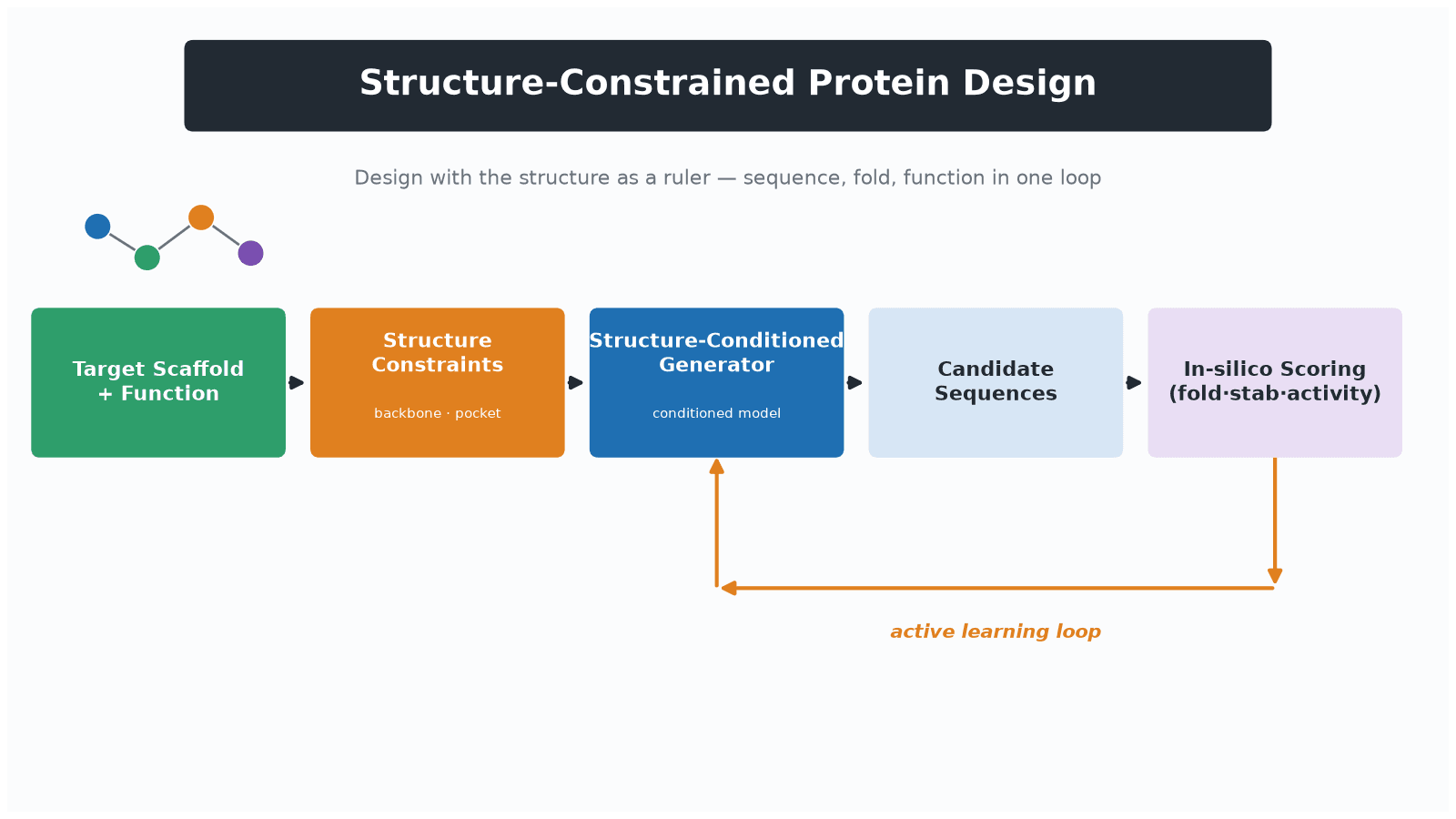
Figure 1 Concept overview of structure-constrained protein design
Category: Primary D (AI/algorithm/platform: concept + capability boundaries); cross C (directed evolution/protein engineering), E (structure/mechanism/sequence analysis)
Structure-Constrained Protein Design: Why "Looking at Structure" Beats "Sequence Only"
Proteins are the executors of life, and their function is determined by three-dimensional structure, which in turn arises from how the amino-acid sequence folds. Traditional AI protein design often starts from "sequence similarity," but sequence similarity does not guarantee structural similarity, let alone the same function. A more rigorous approach has emerged: write the structure itself into the design process as a constraint. This is structure-constrained protein design.
Background & Challenge: Why Protein Design Can't Do Without Structure
Protein function is determined by 3D structure, and 3D structure comes from how the amino-acid sequence folds; designing new proteins from sequence similarity alone often yields candidates that "can be written but cannot fold, can be computed but cannot express." Structure-constrained protein design puts structure back into the generation process as a ruler, so the algorithm satisfies both folding and functional constraints while writing a sequence.
· Sequence ≠ structure ≠ function: sequence determines folding, folding determines function. Optimizing sequence alone can "self-congratulate" in sequence space while ignoring whether the protein can actually fold.
· Scarcity and predictability of structure: high-quality experimental structures are limited, but AI structure prediction (e.g., AlphaFold-class models) makes "approximate structures" cheap, providing usable templates for design.
· Value of constraints: treating backbone, pocket, and interface information as constraints draws a "compliance zone" for the algorithm and compresses a huge sequence space into regions more likely to fold and function.
· Developability is not an afterthought: structure constraints focus on backbone stability and surface properties up front, reducing later rework from "expressible but prone to aggregation or degradation."
A more pressing issue is that many target proteins have no highly similar natural template. For example, designing a protein that catalyzes a new reaction or binds a new target has almost no sequence precedent; here sequence similarity alone fails completely, and one must rely on structure, a more stable constraint, to anchor the folding backbone.
Analogy: structure is the blueprint, sequence is the building material. Looking only at material (sequence) and ignoring the blueprint (structure) can produce a building that will not stand.
Principle & Structure: How Structure Constraints Narrow the Design Space
The core of structure-constrained protein design is to encode known or predicted structural information into the generation condition so the model "remembers" the target scaffold at every step, markedly shrinking the search space and improving success rate; it is typically implemented through backbone coordinates, residue distances/contact maps, secondary structure, and pocket/interface residues.

Figure 2 From structure to constraints, then back to sequence
· Where constraints come from: three input types — experimental structure (X-ray/cryo-EM), homology modeling, and AI-predicted structure.
· How they are used: structure is treated as the "condition" for inverse folding, i.e., given a backbone, infer the sequence.
· Types of constraints: backbone coordinates, Cα distance/contact maps, dihedrals (φ/ψ), secondary structure, pocket residues, interface residues.
· Where constraints are injected: loss functions, attention masks, geometry-equivariant networks.
· In antibody/VHH scenarios: a stable framework backbone with CDR sequences "welded" onto it, balancing affinity and developability.
Inverse folding is the most typical form of structure-constrained design: given a validated or predicted backbone, the model infers at each position the amino acid most likely to fold stably and preserve the specific interface and pocket. Compared with unconstrained generation, inverse folding turns "whether it can fold" into a prior condition of the model rather than something verified only afterward.
It is worth noting that structure constraints are not "stronger is better." Over-constraining can freeze the design space and produce highly homogeneous candidates; under-constraining returns to the "sequence-only" path. A good practice is graded constraints: hard constraints for the backbone and key pocket, soft constraints for flexible regions, leaving room for diversity in between.
Measurement & Selection: How to Tell If a Design "Worked"
Judging whether a structure-constrained design succeeded requires looking at both the "structure level" and the "function level": confirm the sequence folds correctly and expresses stably on the target scaffold, then check whether predicted activity is retained; common metrics include structural consistency with the target scaffold, expression yield and solubility, thermal stability (Tm), and binding affinity or enzyme activity.
· Structural validation: RMSD, pLDDT, and contact-map consistency between the predicted structure and the target scaffold.
· Expression & solubility: SDS-PAGE, SEC, soluble expression yield.
· Stability: Tm (melting temperature), DSC, accelerated stability, aggregate ratio.
· Function/activity: enzyme activity, binding affinity (BLI/SPR), cellular or functional assays.
· Labeling types: computational metrics are [prediction], wet-lab results are [measured]; the two cannot substitute for each other.
Selection focus differs by scenario: for an industrial enzyme, one usually prioritizes temperature, pH, substrate tolerance, and stability; for an antibody or biologic, one prioritizes affinity, specificity, developability, and immunogenicity. A candidate that "passes design" therefore must also truly match the intended application.
Another easily overlooked dimension is reproducibility. Whether a sequence is worth advancing depends not only on a single measured activity, but on whether it is stable and repeatable across batches and expression scales; this is especially critical at industrial or clinical translation stages.
Conditions & Workflow: From Sequence to Deliverable Protein via a Dry-Wet Closed Loop
Structure-constrained protein design is not a "one-click result" but a dry-wet closed loop of design-screen-analyze-redesign: first generate many candidates with structure constraints and score them computationally, then validate expression, purification, and activity in the wet lab, and feed measured data back into the model to form an iterative workflow.

Figure 3 Dry-wet closed-loop workflow for structure-constrained design
· Step 1: Define the target — clarify the target scaffold, the function, and non-negotiable constraints (e.g., catalytic pocket, binding interface).
· Step 2: AI batch design — generate hundreds or thousands of candidates at once.
· Step 3: Computational scoring — rank by folding, stability, and activity.
· Step 4: Wet-lab validation — expression host, induction, purification, activity assay.
· Step 5: Data feedback — measured results are fed back for active-learning iteration.
Workflow essentials: expression-system choice, purification process, and developability (stability, aggregation, solubility, immunogenicity) assessment.
A common misconception is "heavy on design, light on validation." Structure constraints can compress the search space, but the real success rate still depends on whether the wet lab can quickly and cheaply read out expression and activity. The validation stage of the loop therefore often determines overall efficiency — however good the design, it cannot become an iterative workflow if validation lags behind.
In addition, structure-constrained design is especially well suited to "experience-first, improve the known" scenarios: making local improvements on an existing natural protein or a validated antibody is far more likely to succeed than designing from scratch, and is the prudent path most projects prefer to take first.
How MatwingsVenus®(protein design agent) Turns Structure Constraints into Deliverable Proteins
MatwingsVenus®(晓鹜®) integrates structure-constrained protein design, sequence generation, and wet-lab validation into one dry-wet closed-loop platform, so structural information does not stay only at the computational layer but is cross-calibrated with measured data, turning design success rate into a measurable engineering metric.
· Platform capabilities: integrates structure prediction, sequence design, and function/stability prediction (e.g., VenusX, VenusG), with single-point scanning (VenusREM) and multi-point epistatic modeling (VenusPrime) forming an interpretable optimization path.
· Dry-wet closed loop: computational designs are sent to wet-lab validation, and measured data are fed back to the model to reduce ineffective iterations; [measured]/[predicted]/[unknown] data are explicitly separated in the workflow.
· Applications: antibody humanization and affinity maturation, enzyme engineering, single-domain antibodies (VHH), bringing structure constraints down to deliverable sequences.
For users, the value is not just "getting more candidates" but "faster identification of the one that is truly deliverable": the platform connects structure constraints, scoring, and measurement, cuts down trial rounds, and concentrates labor and materials on the paths more likely to succeed.
This also means the ultimate measure of structure-constrained design is not "how many sequences were generated at once," but "how many actually meet the bar in the wet lab." On this point, the dry-wet closed loop turns design success rate into an engineering metric that can be continuously improved, rather than a one-off stroke of luck.
Frequently Asked Questions (FAQ)
How does structure-constrained protein design differ from ordinary AI sequence generation?
Ordinary AI sequence generation is usually based on sequence similarity or language models; structure-constrained design additionally "looks at" structure during generation, writing backbone, pocket, and interface constraints into the condition so outputs are more likely to fold correctly and retain function. The difference is whether structure is used as a hard constraint.
Can structure-constrained design guarantee a protein will fold?
No. Structure constraints substantially raise the probability of foldability and expressibility, but folding is also affected by expression system, post-translational modification, and aggregation; the final judgment is still wet-lab [measured], while the computational layer is only [prediction].
Do computational designs still need wet-lab validation?
Yes. Computation can quickly rank candidates and flag bottlenecks, but it cannot replace real expression and activity measurement; the reliable practice is a dry-wet closed loop: computational screening, wet-lab confirmation, then measured data fed back for re-optimization.
What are the main use cases?
Common in antibody engineering (humanization, affinity maturation), enzyme engineering (activity/stability optimization), single-domain antibodies (VHH), and novel binder design, as well as industrial enzymes or biologic candidates that need stable folding and good developability.
Summary
Structure-constrained protein design turns structure into a quantifiable design constraint, moving AI-generated sequences from "looking plausible" to "can actually fold, express, and work." It does not replace the wet lab but forms a dry-wet closed loop with it to jointly raise design success rate.
One-line Conclusion: Structure-constrained protein design uses structure as a ruler to constrain AI-generated sequences, making designs more foldable, more stable, and more expressible.
— — — — — — — — — — — —
Explore MatwingsVenus®(晓鹜®)
Want to know how structure-constrained protein design can serve your project?
· Get selection advice / submit a sample / request a quote: +86 13061973951, info@matwings.com
· Dry-wet closed-loop platform: /en/dry-wet-closed-loop-platform
· Wet-lab validation and characterization: /en/products/wet-lab
· Expert consultation center: /en/products/expert-center