
News

Marine Microbial Enzyme Mining: How to Find the Next Industrial Enzyme from the Deep Sea?
Marine microbial enzyme mining: how to systematically discover biocatalysts such as proteases, lipases and glycosidases from deep-sea, coastal and polar microbes. This article reviews the diversity of marine microbial enzymes (habitat-linked traits such as salt tolerance, cold adaptation and barophilicity), details the two technical routes of "metagenomic mining + activity screening + sequence mining", and the molecular mechanisms of cold-adapted and halophilic enzymes; it then lays out the industrial workflow from sampling, screening and validation to fermentation and downstream purification, and explains how the MatwingsVenus® (晓鹜®) "dry-wet closed loop" accelerates the discovery and engineering of marine enzymes. Extractable conclusion: marine microbes are among the most diverse natural enzyme libraries, and the key to marine enzyme mining lies in the "sample–screen–evolve–scale" closed loop and industrial scalability.
October 26, 2026
What Is Protein Scaffold Design? — The “Backbone” That Decides Function, Stability & Developability
Protein scaffold design is a core step in protein engineering: while preserving or reshaping a protein's three-dimensional “scaffold,” it uses a closed loop of computational design and wet-lab validation to improve stability, activity, and developability.
October 26, 2026
What Is Function-Constrained Protein Design, and How Does It Make AI-Designed Proteins Actually Work?
Function-constrained protein design treats the target function — binding affinity, catalytic activity, specificity, solubility, stability, and expression yield — as hard constraints embedded in the protein sequence/structure design pipeline, making "does it actually function?" the final criterion. Unlike structure-only design, it combines protein language models, fitness landscapes, and active learning in a "compute → validate → learn" dry–wet closed loop that iterates toward the best candidate. This article explains the core principles, the constraint dimensions, the assay metrics, and the process engineering, and shows how MatwingsVenus® (晓鹜®) turns this method into a deployable platform.
October 26, 2026
Feed Aflatoxin-Decomposing Enzyme: From AFB1 Degradation Mechanism to Selection and Process Control in Feed Enzymatic Detoxification
Feed aflatoxin-decomposing enzymes degrade aflatoxin B1 in feed via oxidative, reductive and hydrolytic mechanisms; mastering the mechanism, activity assay and pH/temperature/enzyme-ratio control is key to stable enzymatic detoxification.
October 26, 2026
Soil Metagenomic Enzyme Mining: How to Discover New Enzymes from the Soil Microbiome?
Soil metagenomic enzyme mining; activity-based screening and sequence-based mining; AI prediction plus wet-lab closed loop to accelerate new enzyme discovery. By combining functional screening with sequence mining, soil metagenomic enzyme mining has become a key route to efficiently obtain industrial enzymes from unculturable microorganisms.
October 25, 2026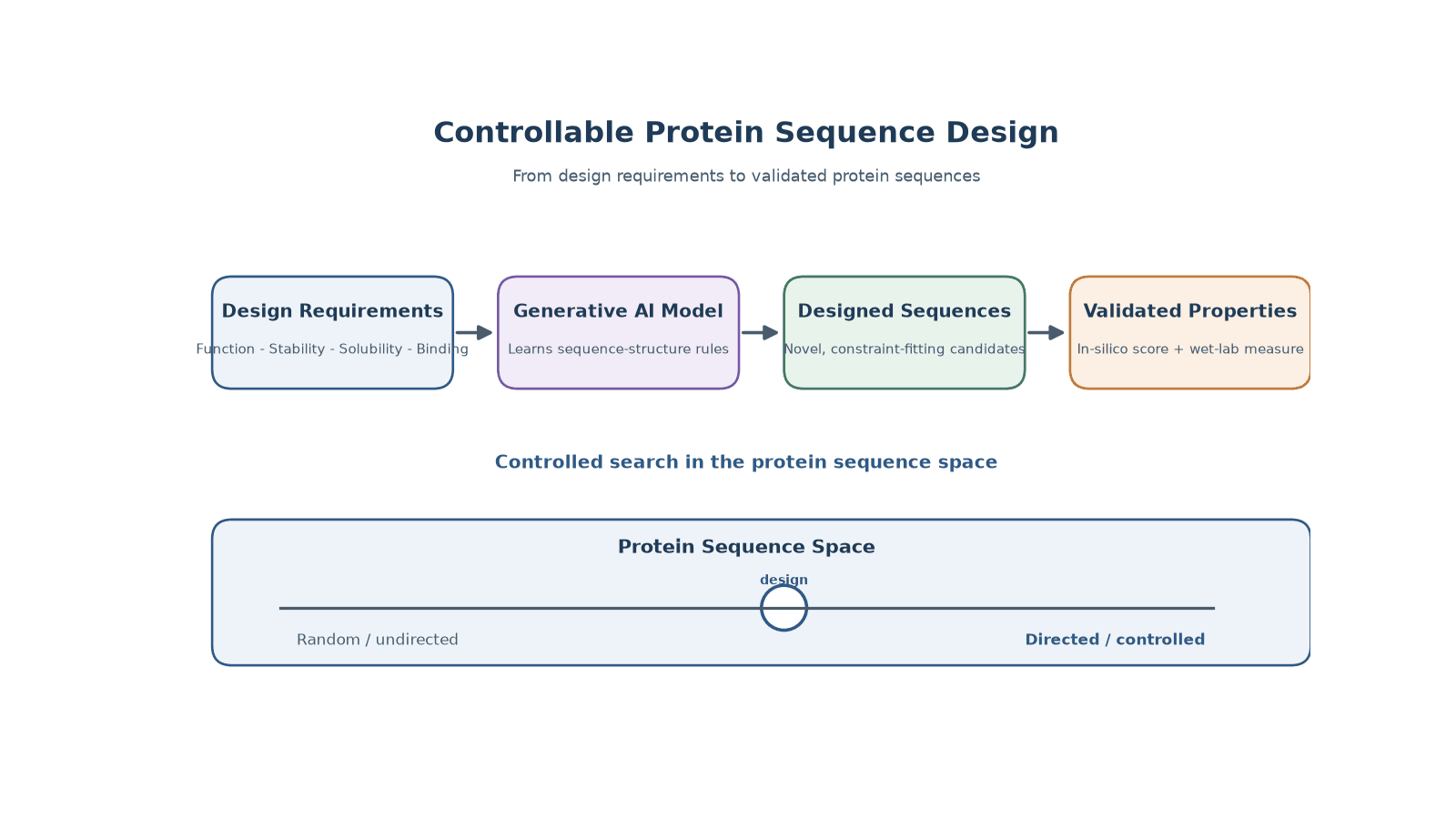
What Is Controllable Protein Sequence Design?
Controllable protein sequence design uses generative AI to create novel protein sequences under constraints such as function, stability, solubility, or binding affinity. It shifts the workflow from finding a sequence from structure to designing a sequence to requirements, using conditional control, fitness landscapes, and active-learning loops to rapidly produce verifiable candidates.
October 25, 2026
How Can Antimicrobial Peptides Balance Killing with Safety? From Membrane-Disruption Mechanism to Sequence Design and Engineering Selection
Cationic amphipathic antimicrobial peptides kill by disrupting the bacterial membrane; selectivity, stability, and cost decide whether they are usable.
October 25, 2026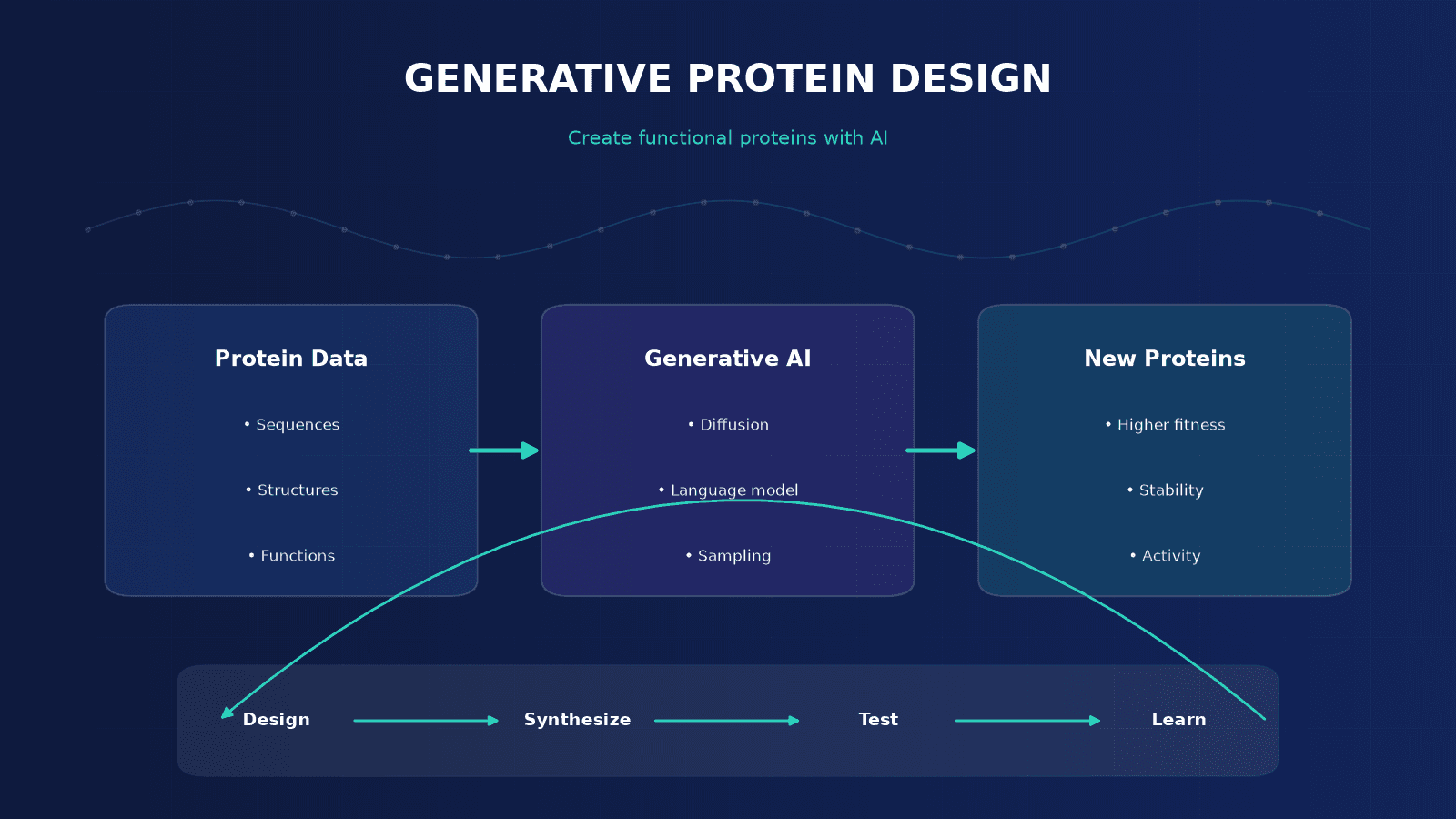
How Does Generative Protein Design Fundamentally Reshape Protein Engineering?
Generative protein design is a machine-learning approach that creates or systematically optimizes proteins from scratch. Rather than simply swapping amino acids, the model learns from large-scale sequence and structure data to generate entirely new candidates with target properties—stronger activity, higher stability, or better secretion. Compared with traditional directed evolution, which relies on heavy random mutation and wet-lab screening, generative methods expand the search space and reduce the number of experimental rounds, focusing wet-lab effort on the most promising candidates. This article explains the core mechanism, validation path, and dry-wet closed-loop workflow, and how MatwingsVenus®(protein design agent)powers protein R&D with an "AI generation + wet-lab feedback" loop.
October 25, 2026
Extremophile Enzyme Mining: From Extreme Environments to Industrial Biocatalysts
This article focuses on extremophile enzyme mining, explaining extremophiles and extremozymes, the molecular stabilization of extremozymes, assay and screening strategies, and the industrial process workflow — framed around MatwingsVenus® (晓鹜®) capabilities in wet-lab, the expert center and the dry-wet closed-loop platform.
October 25, 2026
Can Lysozyme Really Lyse All Bacteria? From Peptidoglycan Cleavage to Selection and Process Control in Industrial Cell Lysis
Lysozyme cleaves the β-1,4 glycosidic bond of cell-wall peptidoglycan; it lyses Gram-positive bacteria efficiently but requires outer-membrane disruption for Gram-negative strains.
October 25, 2026
Pepsin: From Acidic Aspartate Protease Mechanism to Selection and Process Control in Enzymatic Hydrolysis
Pepsin is a representative acidic aspartate protease that hydrolyzes specific peptide bonds under strongly acidic conditions via a catalytic dyad; mastering its substrate preference and control logic is the premise of a stable enzymatic hydrolysis process.
October 25, 2026
Carbohydrate-Active Enzyme Mining: How to Uncover High-Value CAZymes from Metagenomes
Carbohydrate-active enzyme (CAZyme) mining is the technical route to systematically discover glycoside hydrolases (GH) and glycosyltransferases (GT) from environmental metagenomes in soil, hot springs, and marine sources, using sequence alignment, structure searches, and AI algorithms. This article covers the background, principles, assay and screening, and fermentation workflow of CAZyme mining, and explains how MatwingsVenus®(晓鹜®) operates a "dry–wet closed loop" platform to accelerate the journey from gene to industrial enzyme across food, feed, textile, and pharma.
October 25, 2026
Metagenomic Novel Enzyme Screening: From Environmental Gene Libraries to Industrial Enzymes
Metagenomic novel enzyme screening; metagenomic enzyme screening workflow; functional screening; sequence-based screening; AI-assisted enzyme discovery; high-throughput screening. Understand the core principles, the two main routes, and the key process parameters of metagenomic novel enzyme screening, and how AI-enabled dry-wet closed-loop platforms accelerate the path from environmental gene libraries to industrial enzymes.
October 25, 2026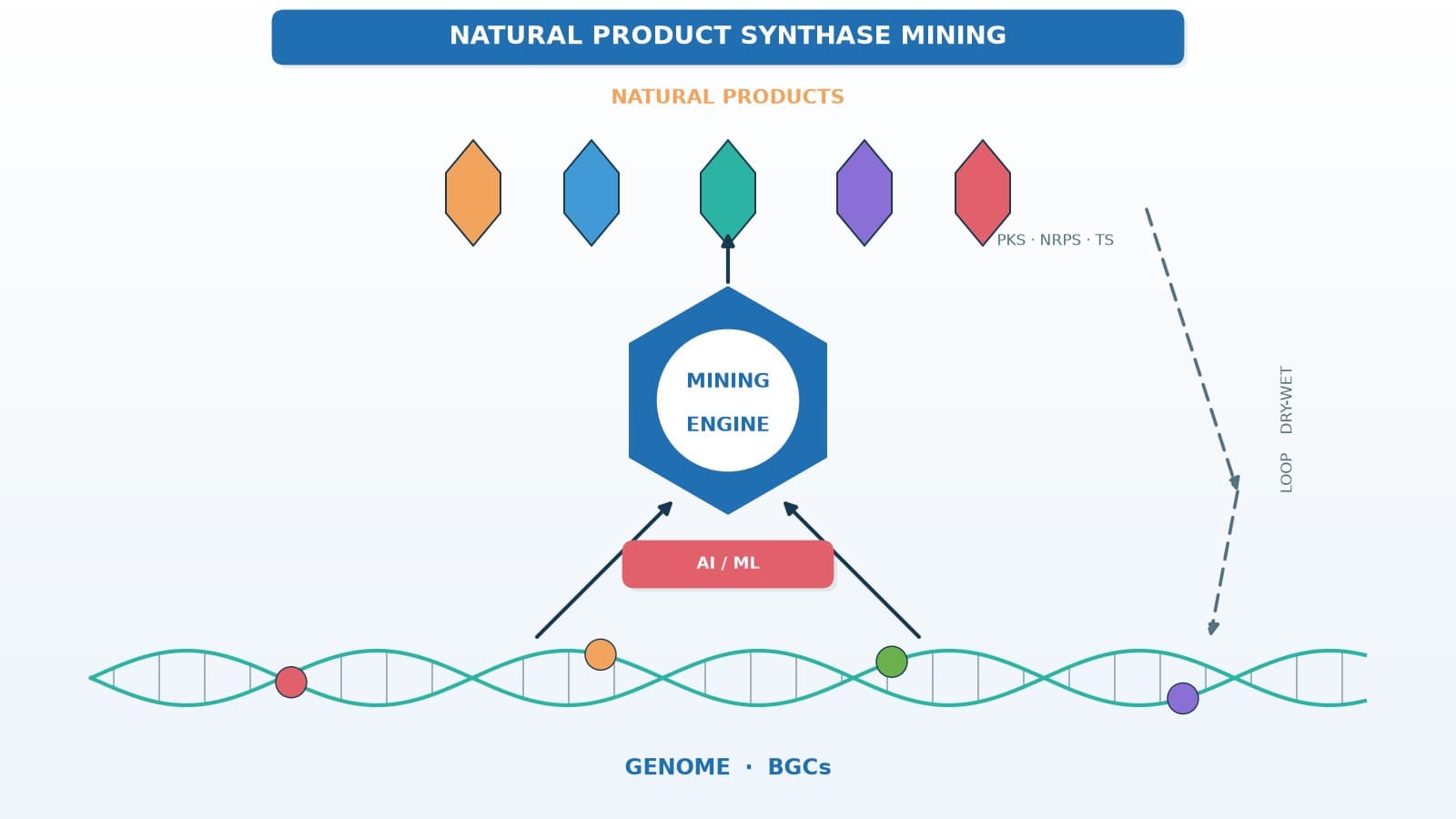
Natural Product Synthase Mining: How to Systematically Search Genomes for "Drug Factories"
Natural product synthase mining refers to using genome sequencing, bioinformatics, and artificial intelligence to systematically locate and identify biosynthetic gene clusters and key synthases that produce natural products such as polyketides, non-ribosomal peptides, and terpenes.
October 22, 2026
Novel Enzyme Discovery Methods: Efficient Mining via Sequence, Structure and AI
Novel enzyme discovery has evolved from opportunistic screening of cultivable microbes into a systematic, closed-loop engineering method that sequences metagenomics, sequence/structure mining, and AI functional prediction together to supply industrially applicable catalysts faster, more broadly, and more controllably.
October 22, 2026
How Does Phytase Unlock the Phosphorus Locked in Feed Phytate? From Mechanism to Process to Selection
Phytase releases phosphorus in feed. Covers mechanism, thermostability, and process control. MatwingsVenus® AI design accelerates phytase engineering.
October 22, 2026
Extreme-Environment Enzyme Mining: Why Extreme Habitats Hold the Next Generation of Industrial Enzymes
Extreme-environment enzyme mining is becoming a frontier in industrial enzyme R&D. Microbes living in hot springs, glaciers, salt lakes and the deep sea harbor enzymes that are more stable and more functionally distinct. This article explains the molecular mechanisms behind thermostability, cold adaptation and halotolerance, reviews three discovery routes — culture-based, metagenomics and AI sequence/structure mining — and the engineering path from expression to process scale-up. It then shows how MatwingsVenus® (晓鹜®) uses an AI-driven dry-wet closed loop to accelerate the discovery, engineering and industrialization of extreme-environment enzymes.
October 22, 2026
Enzyme Mining Phylogenetic Tree Analysis: Systematically Screening High-Value Novel Enzymes from an Evolutionary Map
Phylogenetic tree analysis reconstructs evolutionary relationships among homologous enzymes, compressing enzyme screening from "try one by one" into "select by branch" before any wet-lab work, as a general upstream method for natural enzyme mining.
October 22, 2026
How Does Trypsin Cleave Peptide Bonds Precisely? Serine Protease Mechanism, Selection and Process Control
Trypsin (EC 3.4.21.4) is a pancreatic serine endopeptidase secreted as the inactive zymogen trypsinogen and activated in the duodenum by enteropeptidase. Its catalytic core is a highly conserved catalytic triad (His-57 / Asp-102 / Ser-195), stabilized by an oxyanion hole, while the S1 pocket — via Asp-189 — selectively binds the basic side chains of Lys/Arg, enabling precise cleavage of peptide bonds after basic residues. This article reviews the physiological activation pathway (trypsinogen → enteropeptidase cleaving DDDDK → active trypsin), activity assays (BAEE / TAME esterase activity), selection criteria (animal-derived vs recombinant, purity, non-specific cleavage rate, endotoxin, AOF compliance), and process-control essentials (pH 7.5–8.5, 37 °C, Ca2+ stabilization to suppress autolysis, termination with PMSF/TLCK/aprotinin). It also covers applications in cell-culture passaging, LC-MS/MS proteomics peptide generation and biopharmaceutical processing, and explains how MatwingsVenus® (Xiaowu®) supports data-driven selection, activity verification and process optimization through a "wet-lab + expert center + closed-loop dry-wet platform" combination.
October 22, 2026%20in%20environmental%20DNA%2C%20to%20complete%20gene%20boundaries%20(Gene%20boundary)%20and%20genomic%20context%20(Gen.jpg&w=3840&q=75)
Environmental Microbial Enzyme Mining: How to Find a Real, Expressible, Catalytically Active Enzyme from Environmental DNA?
Environmental microbial enzyme mining turns candidate open reading frames in environmental DNA into research targets with complete boundaries, expression potential, and catalytic function. Because most environmental microbes cannot be routinely cultured, their gene resources are reached only through metagenomic sequencing and functional validation. Reliable mining first confirms gene boundaries and ORF integrity, then expands the candidate set through genomic context, homology search (BLAST), and structure mining (VenusMine), while sequence-driven and function-driven routes complement each other. Candidates are ranked with VenusG combining physicochemical properties, family diversity, and Pareto analysis, then confirmed by heterologous expression and activity assays. Following Search Before Mining, the platform keeps prediction and decision support separate from experimental verification, so each candidate returns to a verifiable, reusable enzyme-resource evidence chain.
October 22, 2026
Why is conserved-site analysis the gateway to an enzyme's catalytic machinery in enzyme mining?
Enzyme mining conserved-site analysis; conserved sites point to an enzyme's catalytic machinery, providing verifiable targets for engineering and annotation.
October 22, 2026
What Is Keratinase, and How Does It Break Down the Toughest Protein — Keratin?
Keratinase is a class of proteases that specifically catalyze the degradation of keratin, the core structural protein of feathers, hair, hooves, and hides. Keratin is rich in β-sheets and densely cross-linked by disulfide bonds, making it naturally hard to degrade; keratinase is precisely the key that unlocks this "structural fortress," which is why it attracts wide interest in feather valorization, leather unhairing, feed protein, and personal-care & cleaning applications.
October 22, 2026
Functional Enzyme Screening: How Do You Find the Rare "High-Performance Engine" Among a Million Mutants?
Functional enzyme screening is the key technology that links "genotype" to "phenotype" and picks high-performance enzymes out of a huge mutant library. Traditional microplate, chromatography and mass-spectrometry methods can screen only a few hundred to a few thousand mutants per day; with single-cell compartmentalization such as fluorescence-activated cell sorting (FACS) and droplet microfluidics (FADS), throughput rises to 10⁷–10⁸/day while reagent consumption drops about a million-fold. This article covers the mechanism, assay and method selection, process tips, and how an AI-driven dry-wet closed loop makes screening better, faster and cheaper.
October 21, 2026
New Enzyme Discovery: First Define What Counts as Real Evidence of Novelty
The key to new enzyme discovery is not being “unseen in a database” — it is first defining which kind of “novelty” you intend to prove, then matching search, ranking, and validation evidence to it. This article unpacks four types of novelty — sequence, structure, reaction, and application — explains that “lowering the similarity threshold ≠ finding a new enzyme,” and clarifies the boundary between natural discovery and protein engineering. Using the MatwingsVenus® (Xiaowu®) Search-Before-Mining workflow, it offers an actionable new-enzyme-discovery path and an FAQ to help R&D teams turn novelty into truly usable enzyme resources.
October 21, 2026
How to Screen a Target Reaction Enzyme: From Candidate Discovery to Experimental Validation
When a researcher searches “how to screen a target reaction enzyme,” what they truly need is not a list of database names but an actionable path that links reaction requirements, known evidence, candidate ranking, and experimental validation. This article first defines the reaction specification, builds a candidate pool from three layers of evidence (database–sequence–structure), ranks by multi-objective trade-offs, and uses a conversational intelligent workflow to close the loop between computational screening and wet-lab validation, helping teams reduce blind trial-and-error while preserving a clear basis for later engineering.
October 21, 2026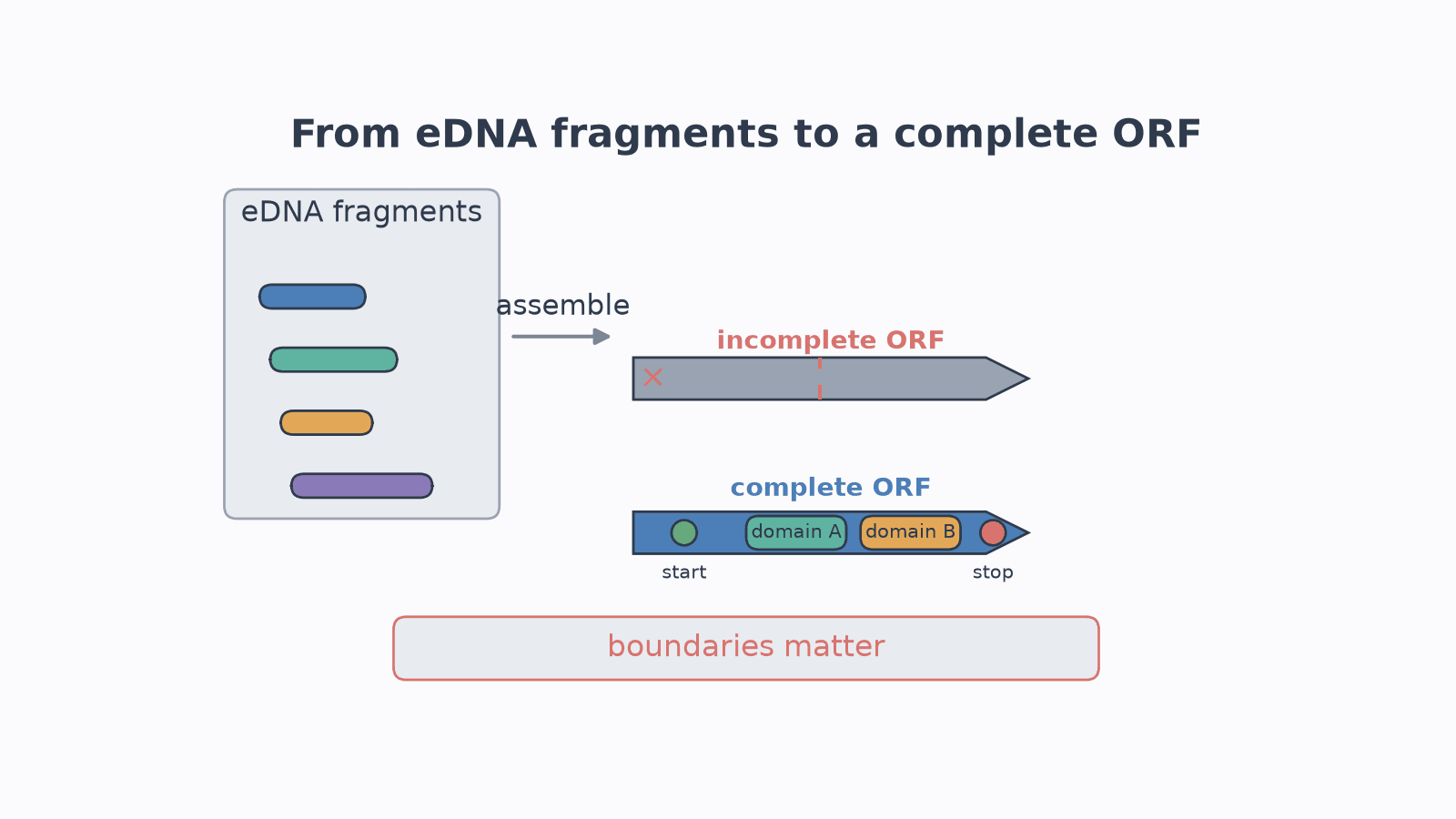
Enzyme Gene Mining: The Key Is Not Just Finding Homologous Sequences
Enzyme gene mining is the process of finding expressible, catalytically active natural enzymes from environmental DNA. This article walks through the key steps in metagenomic enzyme mining: confirming that open reading frame (ORF) boundaries are intact, cross-validating with genomic context, conserved domains, and homology evidence, and weighing sequence-driven versus function-driven (functional metagenomics) routes. It also shows how heterologous expression and catalytic validation connect a candidate gene to real function, and closes with the protein-level discovery and ranking capability of MatwingsVenus®. Written for practitioners in enzyme engineering and microbial biotechnology.
October 21, 2026
How Does a Complete Enzyme Mining Workflow Shorten the Candidate-Validation Path?
The real bottleneck in industrial enzyme work is not a lack of sequences but “too many candidates, slow validation, and disconnected data.” This article systematically sets out a complete enzyme mining workflow: translating industrial goals into verifiable constraints, retrieving curated and metagenomic evidence, expanding candidates through sequence- and structure-based search, running multi-dimensional computational screening with Pareto-based retention, and feeding wet-lab results back into the next round. Drawing on authoritative resources such as UniProt, InterPro, PDB, AlphaFold and MGnify, and search strategies such as BLAST and Foldseek, it shows how layer-by-layer convergence and experimental feedback compress a large candidate pool into a few high-value sequences, thereby reducing wasteful synthesis and shortening the validation path.
October 21, 2026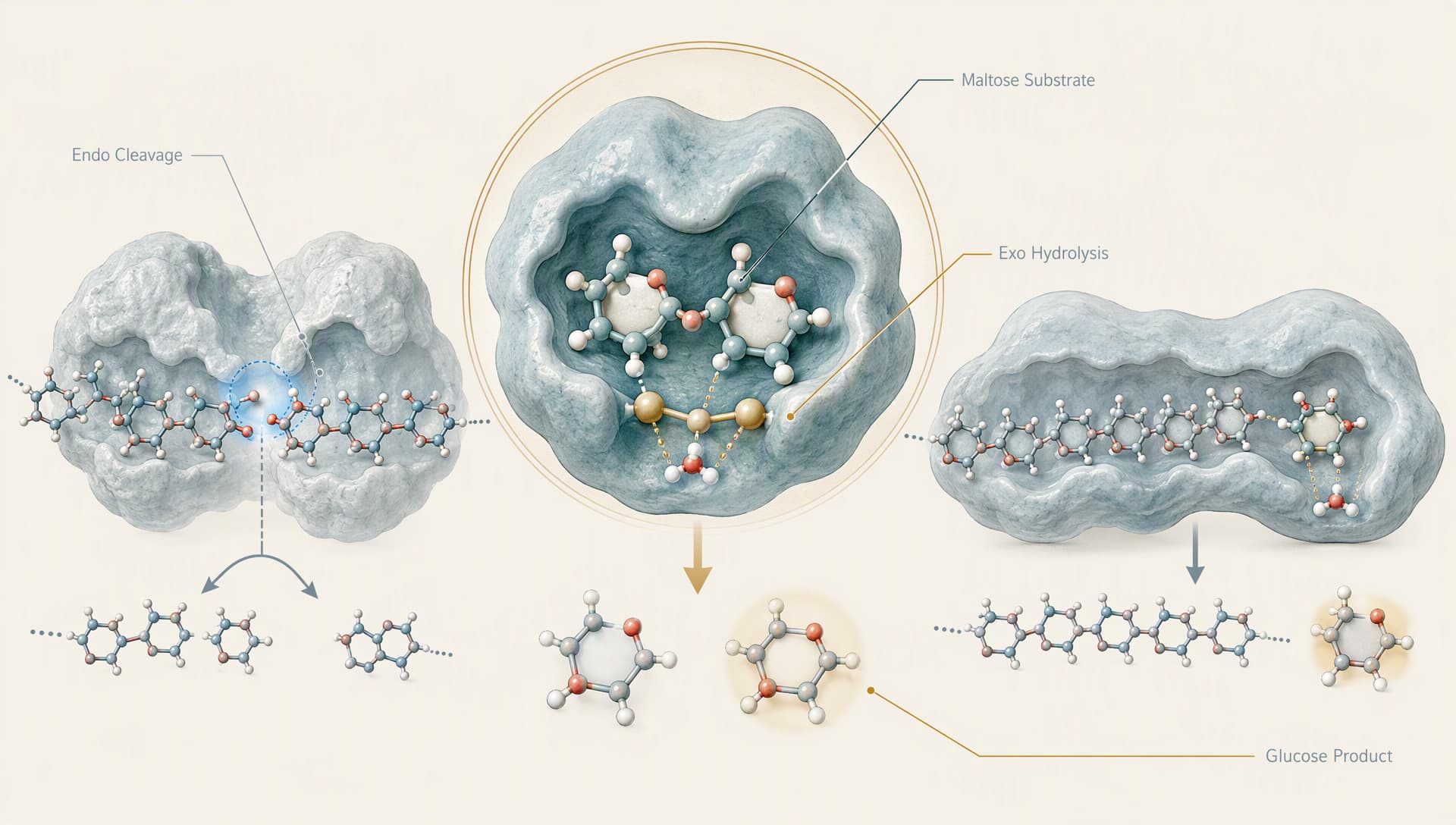
Why Maltase Development Cannot Rely on a Single Activity Readout
Maltase development is often derailed by name confusion, reliance on model substrates, and stability assessment disconnected from the actual process. Starting from the real task of maltose hydrolysis, this article deconstructs candidate screening, product profiles, kinetics, engineering, and scale-up validation, and explains how computational screening, wet-lab experiments, and process scale-up form an auditable development loop.
October 21, 2026
What Is Bromelain? A Complete Guide to the Plant Cysteine Protease: Mechanism, Optimal Conditions and Applications
Bromelain is a natural plant-derived protease extracted from the pineapple stem and fruit; it belongs to the papain-family C1 cysteine endopeptidases and degrades proteins by attacking peptide bonds, which is why it is widely used in meat tenderization, beverage clarification, beer chill-proofing and enzymatic wound debridement.
October 21, 2026
Why Glucoamylase Evaluation Must Go Beyond Saccharification Yield
Glucoamylase (amyloglucosidase, GH15 glycoside hydrolase, EC 3.2.1.3) selection cannot rely on endpoint saccharification yield alone. This article breaks down six dimensions—substrate branching, reaction rate, thermal inactivation, side reactions, batch consistency, and scale-up transfer—to explain why a higher endpoint yield does not mean a better fit for production. It lays out a four-level interpretable evaluation framework covering identity/sample state, benchmark catalysis, real saccharification performance, and process robustness, and shows how computational screening, wet-lab experiments, and process development work together.
October 21, 2026
Intelligent Search of Protein Sequence Space: From Vast Candidates to Validated Discoveries
Intelligent search of protein sequence space connects sequence identification, evidence retrieval, remote discovery, function inference, property screening, and experimental validation into one traceable path. This article presents a five-step workflow and a three-state evidence scheme for selecting candidates that merit wet-lab validation from vast sequence datasets.
October 21, 2026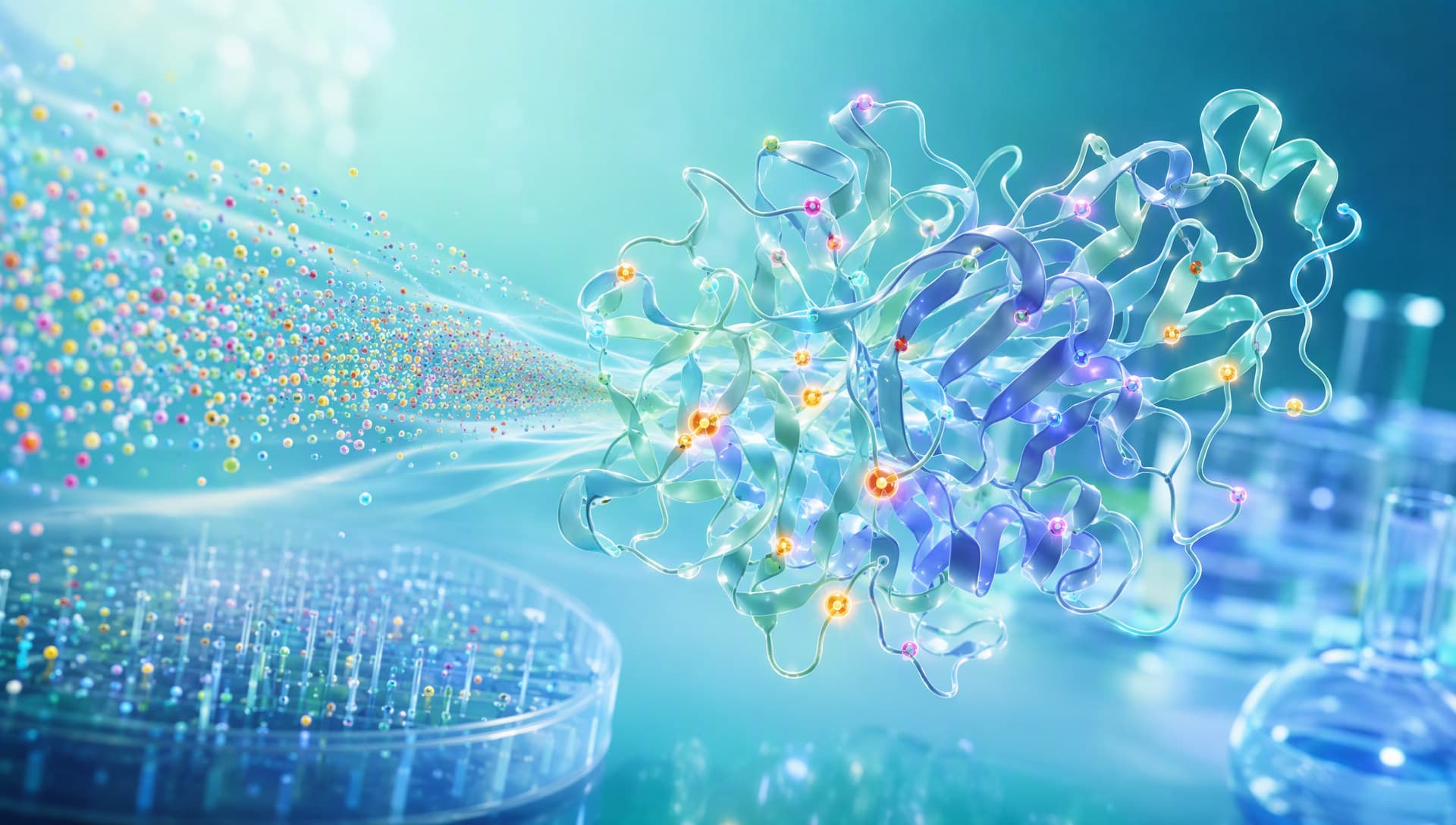
Directed Evolution Positive Mutant Screening: From Variant Libraries to Validated Hits
Directed evolution positive mutant screening becomes more efficient when critical-site protection, candidate ranking, combination modeling, and experimental feedback are used to narrow large libraries into testable, information-rich variant sets.
October 20, 2026
Enzyme Sequence Mining Begins with a Testable Target
Enzyme sequence mining is not a database query followed by a bulk download of similar proteins. It starts with a target reaction, substrate, operating conditions, and expression constraints, then combines evidence from homology, motifs, domains, structure, phylogeny, and property prediction to produce a traceable list of candidates that can be ranked and tested.
October 20, 2026
How Subtilisin Development Connects Expression and Activity Assays
Subtilisin commonly describes extracellular serine proteases in the subtilase family, but family members are not one sequence or one process enzyme. A robust program begins with identity verification and connects precursor expression, autocatalytic maturation, activity assays, substrate maps, fermentation, and purification instead of relying on one band or endpoint.
October 20, 2026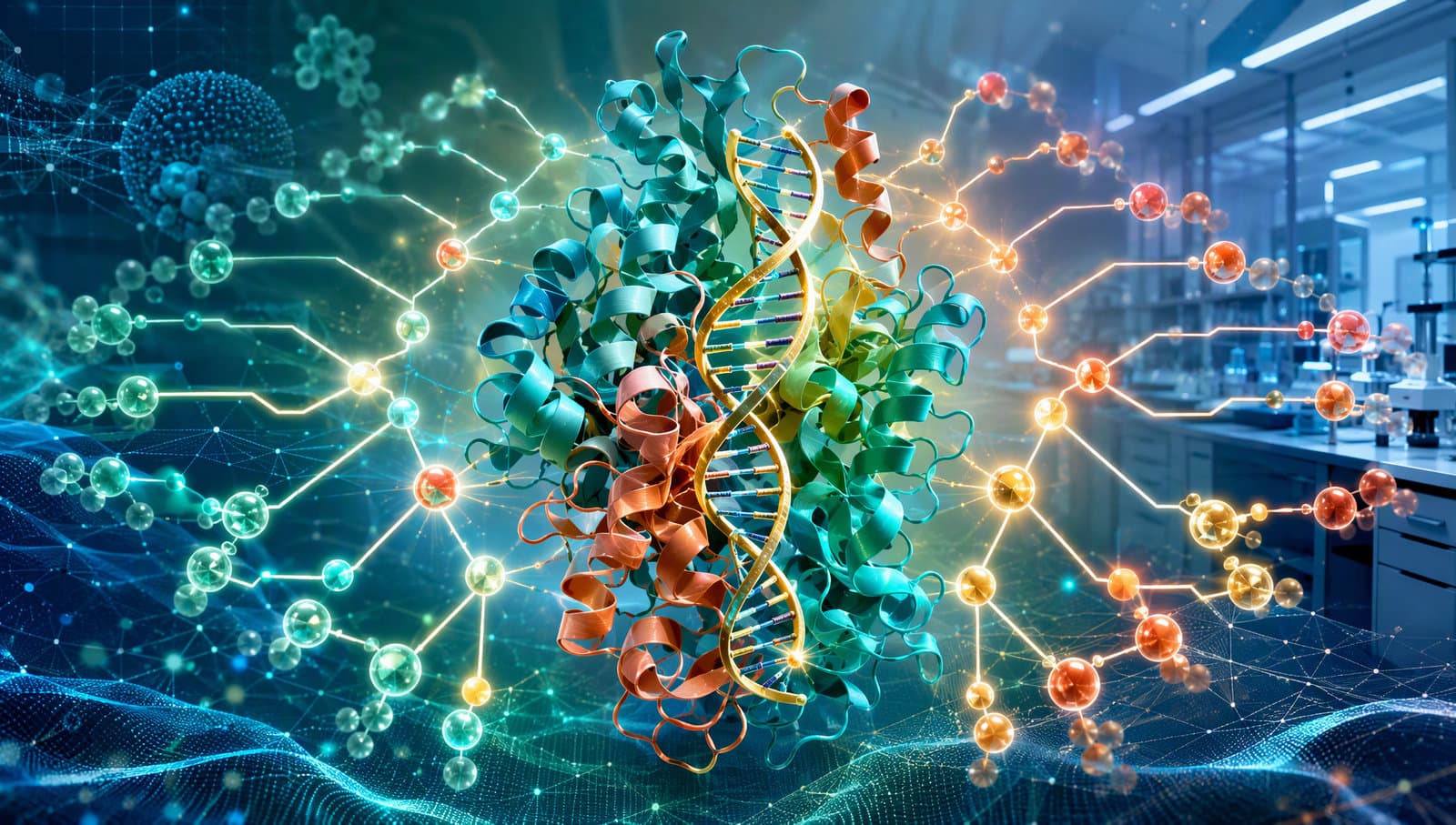
How to Plan Iterative Saturation Mutagenesis Experimental Design
Iterative saturation mutagenesis experimental design is more than choosing several residues and building a library. It connects evidence retrieval, functional-site assessment, library size, screening quality, and next-round decisions into one traceable learning loop.
October 20, 2026
Protein Sequence Space Exploration Needs a Navigable Route
Protein sequence space exploration is not an attempt to test every amino-acid combination. It is a decision process for identifying regions worth entering under a defined objective, structural constraints, and experimental feedback. A useful strategy distinguishes local moves from broader searches, accounts for interactions among mutations, and makes every round reduce uncertainty about the next.
October 20, 2026
High-Throughput Mutation Screening Makes Every Hit Traceable
High-throughput mutation screening is valuable not simply because it measures more samples, but because it can connect sequence, phenotype, and confirmation results at scale. Library coverage, assay resolution, genotype tracking, selection conditions, and follow-up experiments must be designed together before a large signal set becomes a reliable candidate set.
October 20, 2026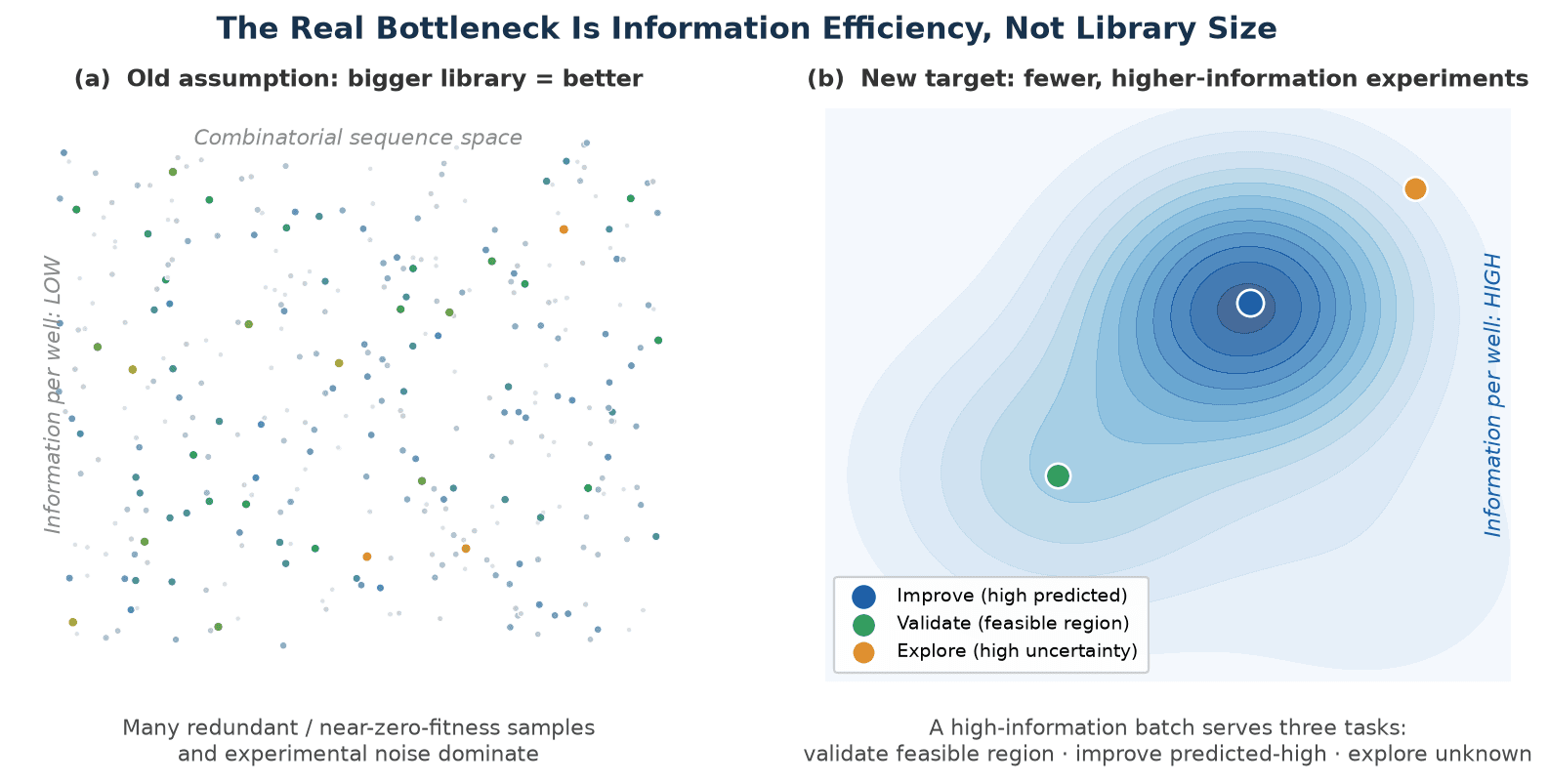
How to Run Directed Evolution Under Low-Throughput Conditions: Make Every Experiment Count
How do you run directed evolution with limited throughput? The key is not blindly shrinking the mutant library or stacking equipment, but closing the loop among objective definition, prior evidence, functional-site constraints, first-round sample design, and active learning — so that limited resources validate the most informative candidates first and continuously update the next round of decisions.
October 20, 2026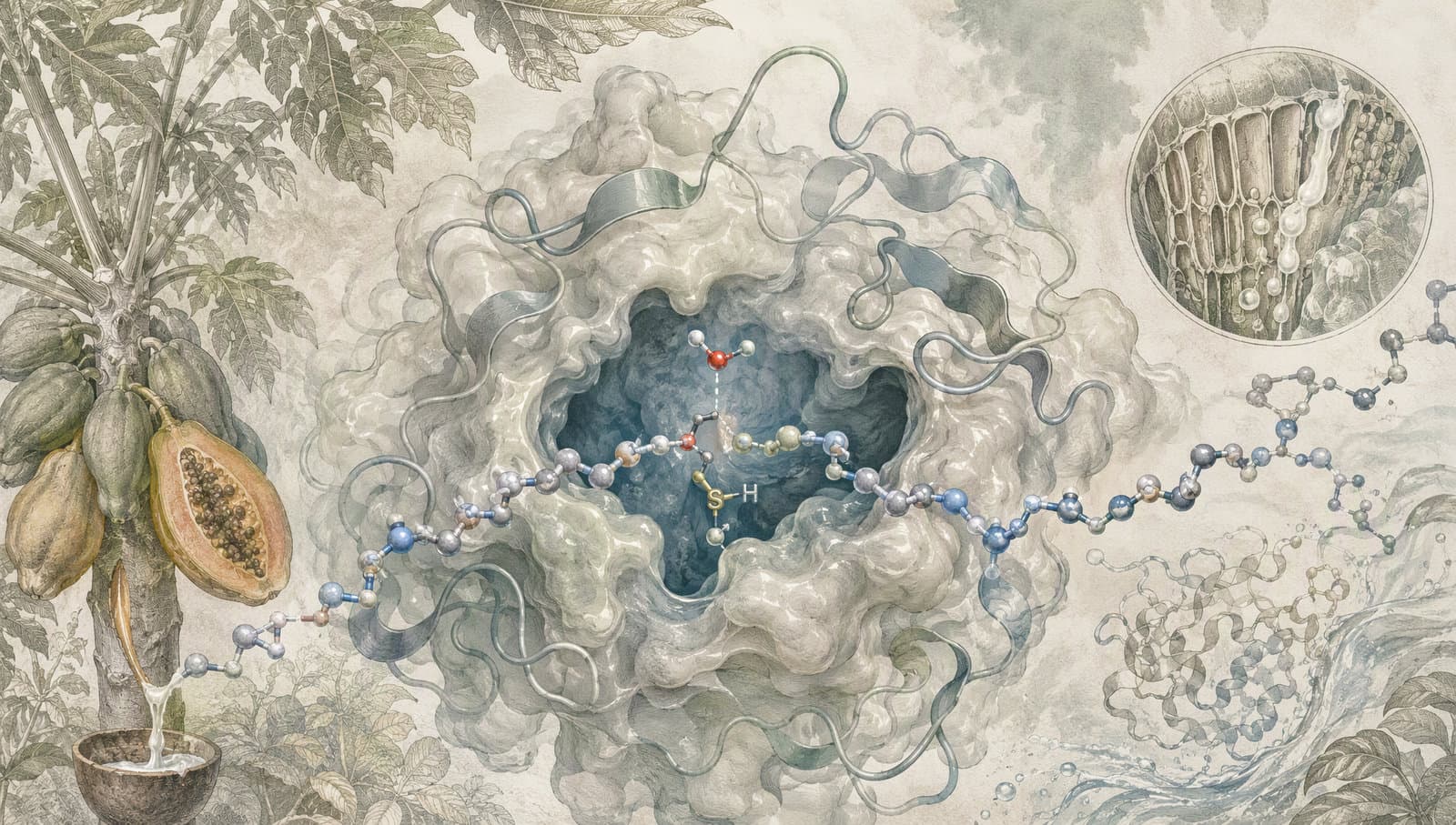
Why Papain Efficiently Cleaves Protein Substrates?
Papain is a classic cysteine protease that hydrolyzes peptide bonds through an active-site cysteine. Its substrate range is broad, yet the observed cleavage pattern still depends on substrate conformation, residues around the scissile bond, catalytic-thiol status, reaction conditions, and quench timing. This article connects the mechanism with assay design, enzyme selection, recombinant production, and process control.
October 20, 2026
Enzyme Stability Begins with Defining How Activity Is Lost
Enzyme stability is not a fixed score independent of conditions. Temperature, time, pH, solvent, concentration, and handling can change the route to inactivation. Stability engineering becomes useful only when the operating condition and functional endpoint determine whether Tm, half-life, residual activity, or another metric should guide decisions.
October 19, 2026
Iterative Saturation Mutagenesis Makes Every Round Inform the Next
Iterative saturation mutagenesis does not attempt every combination at once. It connects library design, screening, template updates, and the next design decision. This guide explains site grouping, library boundaries, cross-round comparability, branch selection, and stopping rules in a traceable protein-engineering workflow.
October 19, 2026
protein directed evolution experimental workflow: From Goal to Validation
A practical protein directed evolution experimental workflow covering goal definition, library design, screening, data feedback, iterative optimization, and final validation.
October 19, 2026
What Is Glutamine Transferase? A Protein Crosslinking Workflow
Glutamine transferase is used here in the transglutaminase context: a protein-bound glutamine site supplies the acyl group, while a primary amine acts as the nucleophilic acyl acceptor. Development success depends on identity checks, site accessibility, reaction windows, product distribution, and scale-up consistency rather than activity alone. This guide connects sequence verification with experimental and process decisions.
October 19, 2026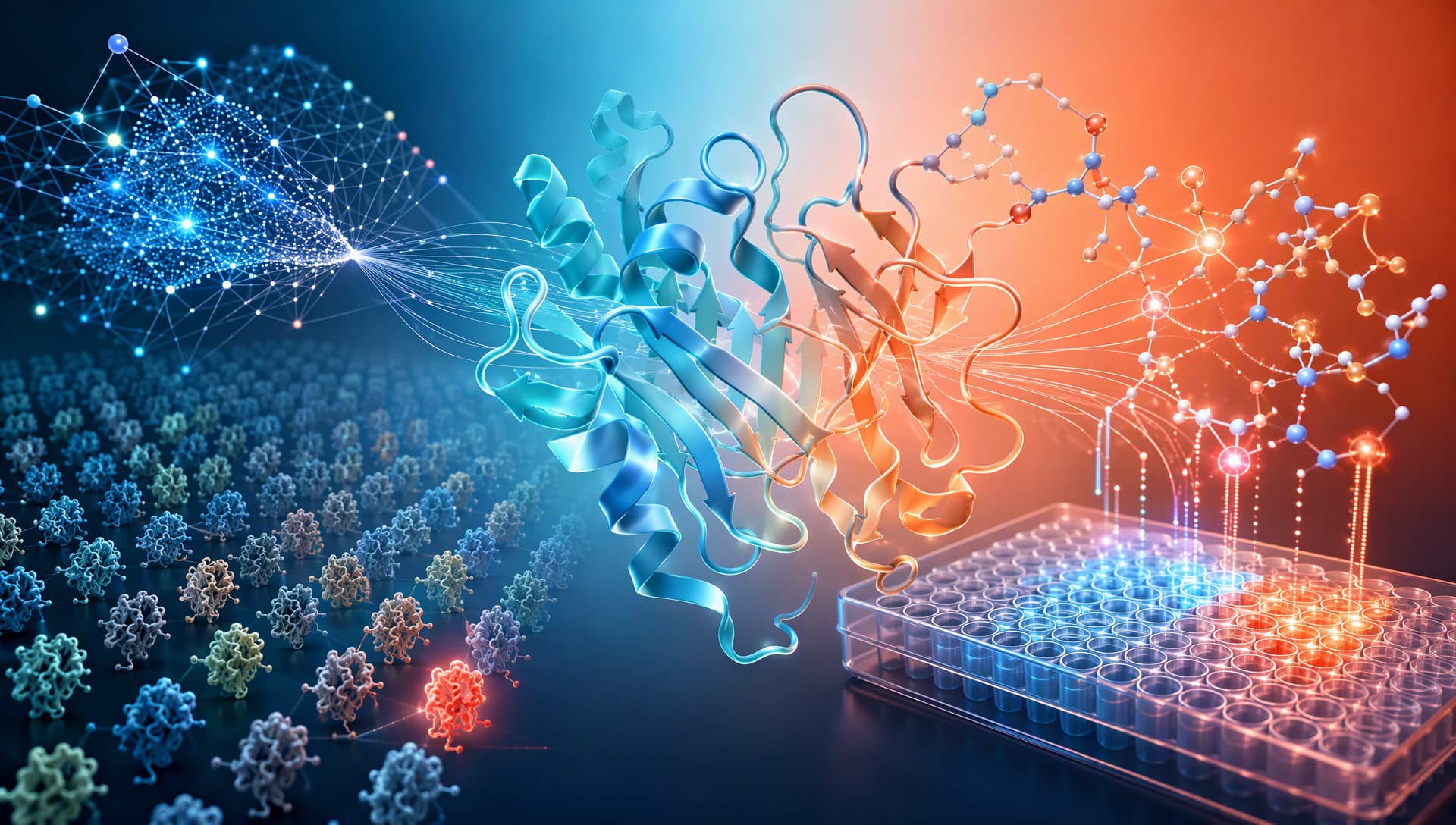
Machine Learning-Assisted Directed Evolution for Smarter Protein Optimization
Machine Learning-Assisted Directed Evolution connects variant data, sequence–function modeling, and wet-lab iteration so protein engineering teams can prioritize the experiments most likely to generate useful performance and information. This guide explains how to define the objective, prepare learnable data, select variants, and build an active-learning loop.
October 19, 2026
Machine-Learning-Guided Directed Evolution Lets Data Choose the Next Batch
Machine-learning-guided directed evolution does not replace experiments with algorithms. It learns sequence–function relationships from measured variants and directs limited experimental capacity toward a more informative next batch. Data definition, model validation, uncertainty, and feedback determine whether the workflow can support real protein-engineering decisions.
October 19, 2026
What Is Glutathione Sulfhydryl Oxidase and How Does It Support Protein Folding?
Glutathione sulfhydryl oxidase supports thiol oxidation and disulfide generation, but useful performance depends on substrate conformation, active-site integrity, expression quality, and assay design. This guide links catalytic mechanism, substrate scope, recombinant production, activity measurement, and process scale-up into one practical development framework.
October 19, 2026
Site-Directed Mutagenesis Turns Mechanistic Hypotheses into Experiments
Site-directed mutagenesis is most useful when a defined substitution tests a defined hypothesis. This guide connects evidence-based site selection, side-chain chemistry, computational prioritization, experimental controls, and careful interpretation in a traceable protein-engineering workflow.
October 19, 2026
Combinatorial Mutagenesis Library Design Methods: From Sites to Screening
A practical guide to combinatorial mutagenesis library design methods, covering site selection, amino acid alphabets, codon schemes, library size, screening capacity, and iterative validation.
October 19, 2026
How Does Protein Disulfide Isomerase Repair Mispaired Disulfide Bonds?
Protein disulfide isomerase is a central participant in oxidative protein folding. It can support disulfide formation, reduction, and reshuffling. For a secreted protein containing multiple cysteines, more expression does not automatically mean more correctly folded product. Development must connect bond pairing, activity, aggregation, secretory load, and cellular redox conditions.
October 19, 2026
Protein Language Models Turn Sequences into Biological Representations
A protein language model learns contextual patterns from large collections of amino-acid sequences and converts each sequence into numerical representations that can support comparison, prediction, and generation. It is not a protein “chatbot” that automatically reveals experimental truth. Its research value depends on task adaptation, evidence retrieval, structural constraints, and wet-lab validation.
October 18, 2026
Scan to join community