
Lipase Mining & Engineering: From Sequence to Industrial Performance
Published on October 27, 2026
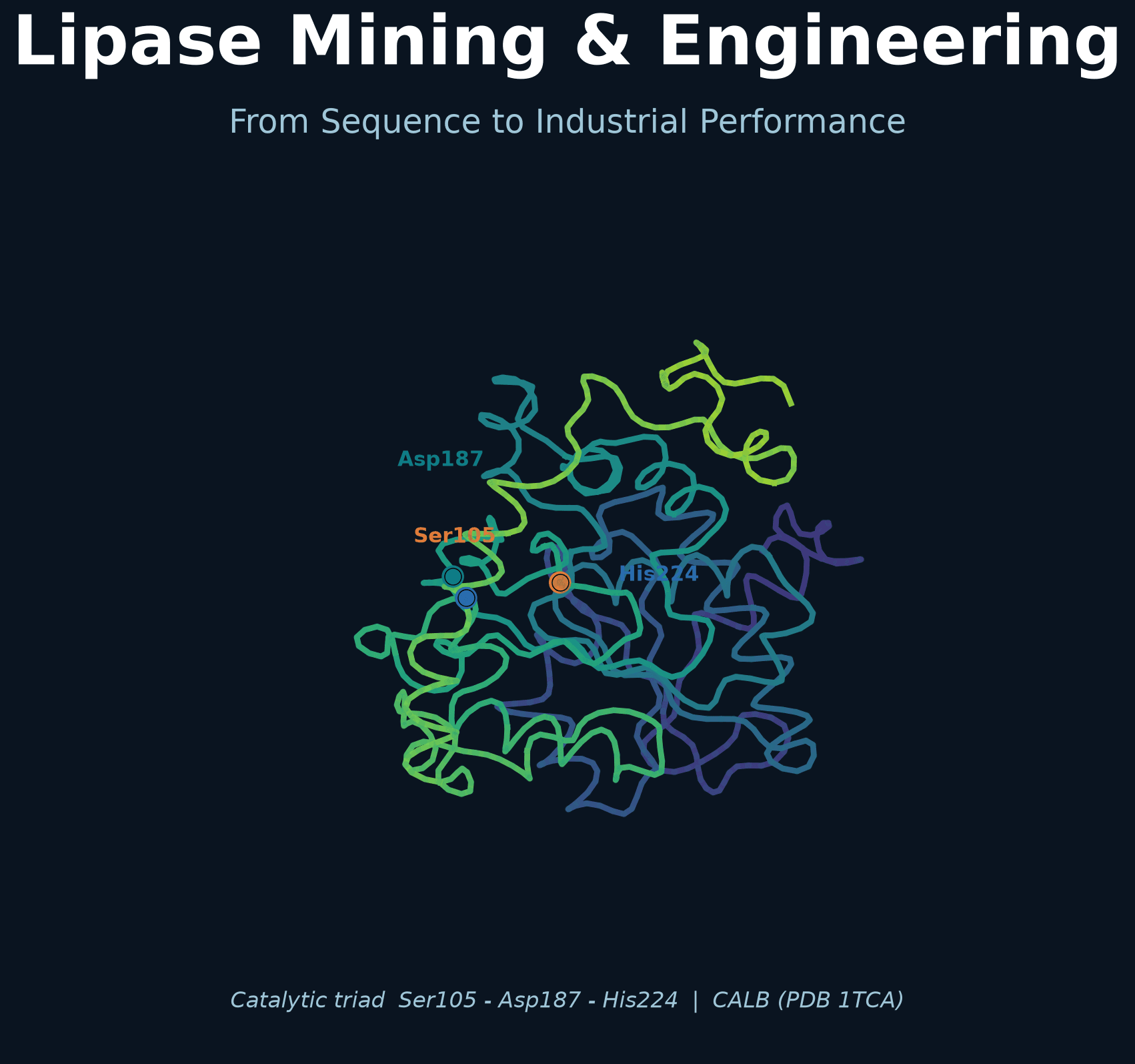
Fig. 1 Lipase mining & engineering landscape
Lipases (EC 3.1.1.3) catalyse the hydrolysis, esterification and transesterification of triglycerides at the water-oil interface, making them a core member of the industrial enzyme toolkit, used across food, detergents, pharmaceuticals, biofuels and personal care. Natural lipases, however, often fall short of industrial requirements in catalytic activity, thermostability, pH tolerance and substrate specificity. Lipase mining & engineering meets this challenge through two complementary routes - discovering new enzymes from sequence/structure space, and optimising known enzymes by directed evolution or rational redesign - turning a “usable” enzyme into an industrially "useful" one.
1. Why lipase mining & engineering, and what does it solve
Industry does not just need a lipase that is “active”; it needs an enzyme that is stable, efficient and selective under demanding conditions. Lipase mining & engineering essentially addresses four problems: (1) insufficient activity, making unit enzyme cost too high; (2) poor thermostability, limiting high-temperature processes or long-term storage; (3) low pH/solvent tolerance, causing inactivation in organic phases or extreme pH; and (4) mismatched substrate specificity or enantioselectivity, generating by-products and hard separations.
On the route side, mining is responsible for “finding candidates” - discovering new lipases via metagenomics, sequence databases and structure databases; engineering is responsible for “optimising the chosen enzyme” - using directed evolution, rational design and increasingly mature AI-assisted evolution to systematically improve target properties while preserving beneficial traits. Together they take a lipase toward industrial scale-up.
2. Lipase structure and catalytic mechanism
Most lipases belong to the α/β-hydrolase fold family, with a central β-sheet flanked by α-helices, and the catalytic centre buried deep in the substrate channel. Catalysis relies on a classic catalytic triad, typically serine-histidine-aspartate (or glutamate): the histidine acts as a general base to activate the serine hydroxyl, while aspartate/glutamate stabilises the protonated histidine.
Taking Candida antarctica lipase B (CALB, PDB 1TCA), widely used in industry, the catalytic triad is Ser105-Asp187-His224. The reaction proceeds via an acyl-enzyme intermediate: the serine hydroxyl attacks the substrate carbonyl to form a covalent intermediate, which is then deacylated by water to release the product and regenerate the enzyme.

Fig. 2 Lipase catalytic triad and the acyl-enzyme cycle
Beyond the catalytic triad, the oxyanion hole and the lid / substrate channel determine substrate specificity and interfacial activation. Understanding these structural elements underpins rational mutation-site selection and activity prediction.
3. Assaying and screening lipase activity
Assays are the yardstick of lipase mining & engineering, defining the accuracy and throughput of screening. Common methods include p-nitrophenyl ester (e.g. p-NPP) hydrolysis with colorimetric readout (suitable for high throughput), titrimetric hydrolysis of triglycerides (pH-stat, closer to the real substrate), and chiral-substrate resolution for enantioselectivity.
For engineering goals, screening usually assesses several dimensions at once: catalytic activity (initial rate or specific activity), thermostability (T½ or Tm), pH/solvent tolerance, and substrate specificity or enantioselectivity (often as the E value). Selection involves a trade-off between throughput and information: fluorescent/colorimetric microplate assays suit primary screens, whereas GC/HPLC or chiral analysis suits secondary screening of candidate clones.
4. Routes and process conditions for lipase mining & engineering
On the mining side, common entry points are metagenomic mining (assembling new lipase genes from environmental samples), sequence-similarity search (BLAST/DIAMOND), and structure-based mining (structural similarity or active-site fingerprint comparison). On the engineering side, one can progress from rational design (structure- and mechanism-driven), to semi-rational design (libraries around active-site or thermostability hotspots), to directed evolution (random mutation plus screening).
On process and evaluation conditions, attention goes to cultivation and induction (host, temperature, inducer), protein purification strategy (affinity tag / ion exchange / gel filtration), and enzymatic characterisation conditions (optimal temperature, pH, substrate concentration). The interfacial activation of lipases means a suitable emulsifier or surfactant is often needed to expose the active site. Different process conditions strongly affect whether assay results reflect real industrial performance.

Fig. 3 AI-driven dry-wet closed-loop lipase engineering
With AI-assisted evolution, the workflow shifts from “blind screening” to a dry-wet closed loop: wet-lab data flow back to retrain models, which predict better mutations and thereby cut unproductive experiments and raise hit rates. This is what distinguishes modern lipase mining & engineering from conventional random mutagenesis.
5. The role of MatwingsVenus® (晓鹜®) in lipase mining & engineering
MatwingsVenus® (晓鹜®) bridges AI prediction and wet-lab validation through its dry-wet closed loop, providing a toolchain for lipase mining & engineering that spans enzymatic characterisation and functional-residue maps (VenusX), single-point scanning (VenusREM) and multi-site epistatic modelling (VenusPrime), while continuously aligning predictions with measured data to drive the mine-design-build-test-learn cycle.
Related products & services
High-throughput construction, expression, purification and activity assays for lipase engineering.
• Expert center
Professional consultation and campaign design for lipase directed evolution, characterisation and scale-up.
• Dry-wet closed-loop platform
A data-driven iterative loop that accelerates the R&D cycle of lipase mining & engineering.
6. Frequently asked questions (FAQ)
1. What is lipase mining & engineering?
It is the process of discovering new natural lipases through sequence/structure mining and then improving known or newly found lipases by directed evolution or rational/semi-rational design to enhance activity, thermostability, pH/solvent tolerance and substrate specificity.
2. Which amino acids form the lipase catalytic triad?
Most lipases use a serine-histidine-aspartate (or glutamate) triad; for example, CALB (PDB 1TCA) is Ser105-Asp187-His224.
3. How can I screen for a more thermostable lipase?
Assess residual activity after heat incubation, differential scanning calorimetry (DSC) or fluorescent thermal-shift assays to estimate Tm/T½, and combine these with high-throughput screening to isolate thermostability-improved clones from a mutant library.
4. What methods are used to mine new lipases?
Common approaches include metagenomic mining, sequence-similarity search (BLAST/DIAMOND) and structure-based mining; the latter can reveal distant lipases that diverge in sequence but share a similar fold.
5. How does AI accelerate lipase engineering?
AI learns sequence-function relationships to predict beneficial mutations and uses active learning to select the most informative experiments, reducing unproductive work and raising hit rates within a dry-wet closed loop.
6. What are the main difficulties in lipase mining & engineering?
The main challenges are trade-offs among activity, stability and substrate specificity, as well as gaps between assay results and real industrial performance; both require reliable enzymatic characterisation and well-chosen screening metrics.
7. Conclusion
Lipase mining & engineering is a coordinated effort of discovery and optimisation: structure and mechanism as the foundation, reliable activity assays as the yardstick, and directed evolution plus AI-assisted design as the engine. Once the dry-wet closed loop truly runs, “from a sequence to a scalable industrial enzyme” ceases to be a vision and becomes a reproducible R&D path.